



SHILLONG, NOV 3: Shillong on Tuesday got more than a renovated building. It got a statement of intent: that Meghalaya’s future will be built on books, heritage and homegrown enterprise.
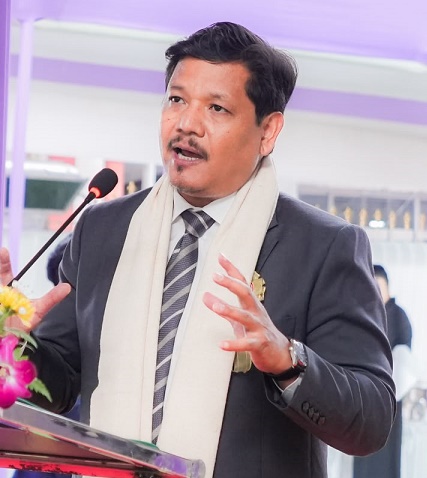
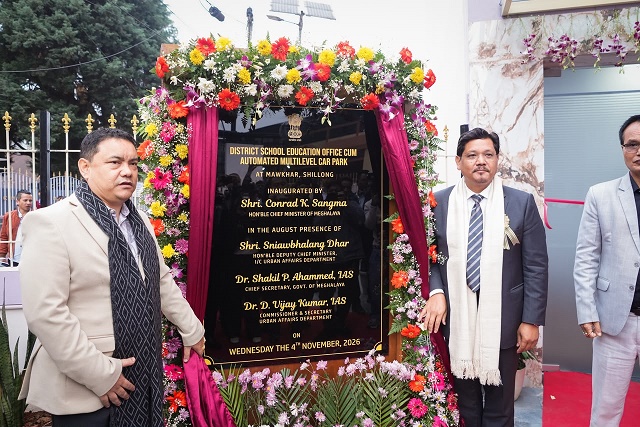
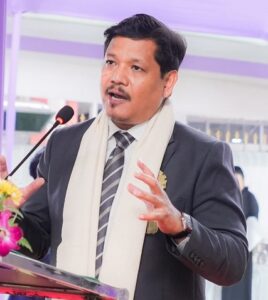
Inaugurating the renovated State Central Library and the House of Ryndia, Chief Minister Conrad K Sangma tied together three strands that rarely share a stage: living heritage, public access to knowledge, and market opportunity for traditional weavers.
For Sangma, the library is not a relic of a pre-digital age. It is a tool for personal development, the second pillar of his growth model after infrastructure.
The first pillar, he explained, is closing gaps in roads, buildings, schools, hospitals and sports facilities through significant capital investment. The second is ensuring that infrastructure changes lives, whether it is a farmer increasing production or an entrepreneur reaching national markets. The third is tradition, identity, culture and roots.
That philosophy ran through his tourism pitch as well. Meghalaya, he said, cannot live forever on Sohra, Mawlynnong and Dawki alone. The State is now building new brands around 11 specific locations, and turning sports, music, textiles and handicrafts into viable economies that create livelihoods and jobs, with communities at the centre of branding.
Inside the library, the change is visible. The 1974 institution, which now holds over 2 lakh volumes, has around 31,000 registered members and issues about 200 books daily, has been modernised with Rs 2.23 crore assistance under the National Mission on Libraries.
There are improved reading facilities, archive sections, a children’s reading area, and an upgraded Knowledge Corner for aspirants preparing for national-level competitive examinations. E-Granthalaya software, Online Public Access Catalogue and Web OPAC facilities now make it easier to locate books.
But Sangma’s most striking idea was cultural, not technological.
“There is a push to make libraries ‘cool’ and enjoyable through better amenities like local coffee, tea and snacks to encourage students to spend time reading without mobile devices,” he said, urging parents and teachers to help children build a consistent reading habit.
A few steps away, the House of Ryndia offered the other half of the story: a dedicated platform for Meghalaya’s indigenous textiles, meant to give weavers visibility, access and market linkages.
Alongside, the State-Level Living Heritage Arts and Craft Village Festival celebrated what Sangma called living heritage: traditional arts, crafts, music, food practices, oral traditions and community knowledge still practised across Meghalaya.
Together, the library and the House of Ryndia made the Chief Minister’s point in brick, thread and paper: progress in Meghalaya must be tangible, but it must also remain culturally grounded.
By Our Reporter